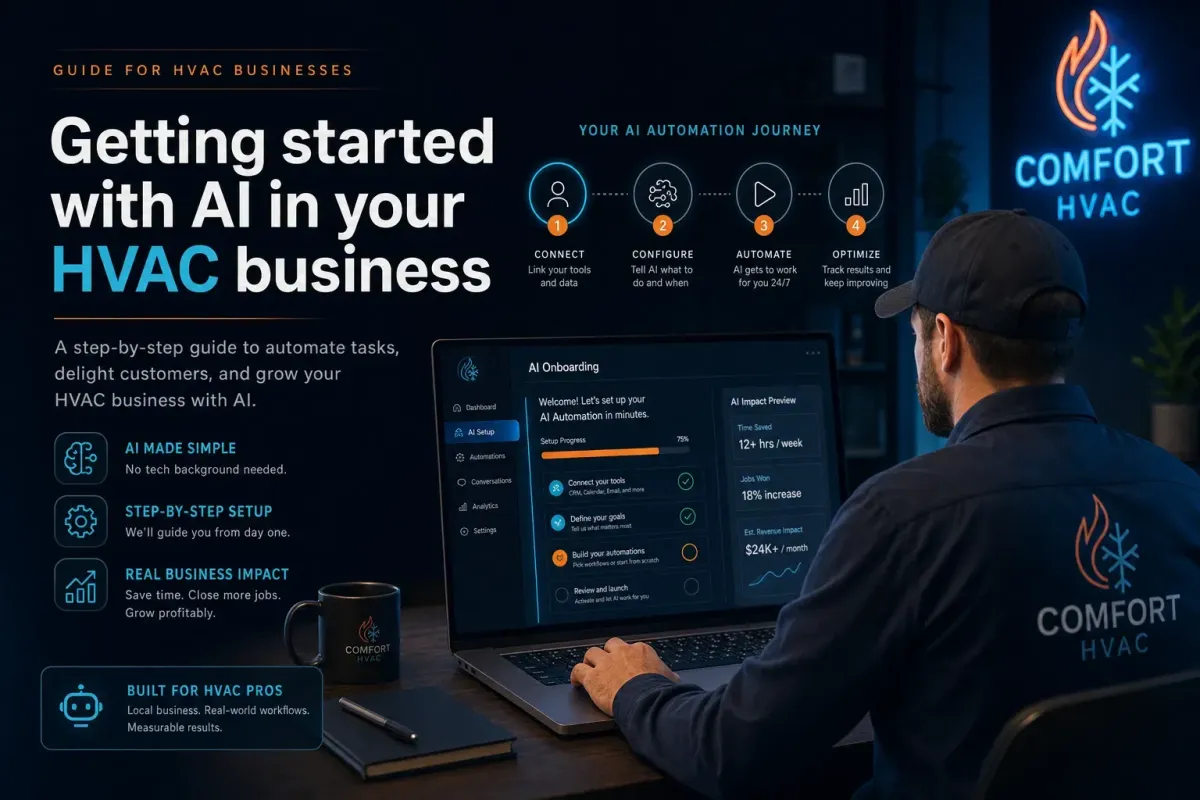
How to Get Started with AI in Your HVAC Business
The HVAC industry has always been built on technical expertise, reliable service, and hard-earned customer trust. But a new kind of tool is quietly transforming how the best HVAC companies operate — artificial intelligence. Whether you're running a two-person operation or managing a fleet of 30 technicians, AI can help you win more jobs, cut costs, and deliver a better experience to every customer. Here's how to get started.
Why AI Makes Sense for HVAC
Before diving into tactics, it's worth understanding why AI is a natural fit for this industry. HVAC businesses are data-rich environments — service call histories, equipment makes and models, warranty records, seasonal demand patterns, customer preferences, and technician schedules. Until recently, most of that data sat unused in spreadsheets or outdated software.
AI tools can now make sense of all that information in real time, helping you make smarter decisions faster. And you don't need to be a tech company to take advantage of it.
1. Start with Your Customer Communications
One of the easiest and highest-impact places to introduce AI is in how you communicate with customers. AI-powered chatbots and virtual assistants can handle after-hours inquiries, qualify new leads, answer common questions (like "Do you service my area?" or "What does a tune-up cost?"), and automatically book appointments — all without a human picking up the phone.
Tools like ServiceTitan, Jobber, and HouseCall Pro are already integrating AI features directly into their platforms. If you're already using field service software, check whether these features are available to you — you may be closer to AI adoption than you think.
Quick win: Set up an AI chat widget on your website to capture leads around the clock. Even a basic tool can recoup its cost within the first few booked jobs.
2. Use AI for Smarter Scheduling and Dispatching
Dispatching is one of the most complex daily challenges in HVAC — balancing technician skills, location, job urgency, and customer time windows. AI-powered scheduling tools can factor in all of these variables simultaneously and suggest optimal routes and assignments in seconds.
This isn't just about efficiency. Smarter dispatching means less windshield time, more jobs completed per day, and fewer overtime costs. Some platforms can even predict how long a job will take based on historical data, reducing back-to-back scheduling conflicts.
If you're not ready for a full platform switch, look for scheduling add-ons or AI features within your existing software before investing in something new.
3. Embrace Predictive Maintenance
This is where AI starts to feel genuinely powerful. Predictive maintenance tools use equipment data — temperature readings, runtime hours, error codes, and more — to flag systems that are likely to fail before they actually do.
For your customers, this means fewer emergency breakdowns and longer equipment life. For your business, it means more planned service calls, stronger service agreements, and a reputation as a proactive partner rather than a reactive repairman.
Smart thermostats and connected HVAC systems (like Ecobee, Honeywell, and Carrier's connected platforms) already generate the data you need. Pair them with AI-based monitoring software to turn that data into a new revenue stream.
4. Let AI Handle Your Estimates and Quotes
Writing accurate estimates takes time — and inconsistency in pricing can cost you jobs or eat into your margins. AI estimation tools can pull from your parts pricing, labor rates, local market data, and job history to generate accurate, professional quotes in minutes rather than hours.
Some tools can even flag when a quote is priced too low compared to similar past jobs, helping you protect your profitability over time. For larger commercial bids, AI can assist with proposal writing, helping you produce polished documents that stand out from competitors.
5. Train Your Team Without the Classroom
AI-driven training platforms are making it easier than ever to upskill technicians on the job. Interactive video modules, AI-powered quizzes, and virtual troubleshooting simulations let your team learn at their own pace — without pulling everyone off the job for an all-day session.
This is especially valuable for onboarding new hires and keeping experienced techs up to date on new equipment and refrigerants.
Where to Begin
If all of this feels overwhelming, start small. Pick one area — customer communications, scheduling, or estimates — and test a single tool for 60 to 90 days. Measure the impact. Then expand from there.
AI isn't here to replace your technicians or your expertise. It's here to handle the repetitive, time-consuming tasks so your team can focus on what they do best: solving problems, building relationships, and keeping homes and businesses comfortable year-round.
The HVAC companies that start experimenting now will have a meaningful head start on the ones that wait. The good news? Getting started has never been easier.
Precision Automation Solutions builds and manages AI-powered lead conversion and lead generation systems for HVAC companies nation-wide. Setup takes 72 hours. You handle your customers — we handle everything else.
